ISO 13485:2016 Certification
ISO 13485 certification (Medical Devices Management System) is a certificate granted to an organisation or business once it has successfully achieved compliance with the requirements of the ISO 13485:2016 medical devices management standard.
ISO 13485:2016 is an international standard issued by the International Organization for Standardization (ISO) that sets out the requirements for a medical devices management system within an organisation or business. To obtain ISO 13485 certification, an organisation must establish, implement and maintain an effective medical devices management system, and an independent certification body (known as a certification body or third-party assessor) must then confirm that it complies with the requirements of the standard.
ISO 13485 certification is valid for 03 years and requires periodic audits to ensure that the organisation continues to maintain and improve its medical devices management system over time. It is regarded as evidence of a commitment to ensuring that medical products manufactured and distributed meet specific quality and safety requirements, thereby building trust among customers, partners, regulators and other stakeholders.
Scope of ISO 13485:2016 Certification
ISO 13485 is an international standard concerning quality management systems in the manufacture and distribution of medical products. The scope of ISO 13485 certification defines the specific requirements that an organisation or business operating in the healthcare sector must follow to ensure the safety and quality of its medical products.
The scope of ISO 13485 certification may include requirements on:
- Quality management: Defining the management structure, processes and systems to ensure compliance with the regulations and requirements of ISO 13485.
- Document control: Ensuring that documents relating to medical products are properly stored, reviewed and validated.
- Product design and development: Ensuring that the design and development process for medical products follows safety and performance requirements.
- Inspection and verification: Carrying out product quality inspection and verification to ensure products meet the applicable standards and requirements.
- Materials and supply management: Ensuring that raw materials and suppliers meet the relevant healthcare standards and requirements.
- Incident investigation and product recall: Establishing procedures to handle incidents involving medical products and to recall products where necessary.
- Post-market surveillance: Monitoring and reporting on the performance and safety of products after they have been placed on the market.
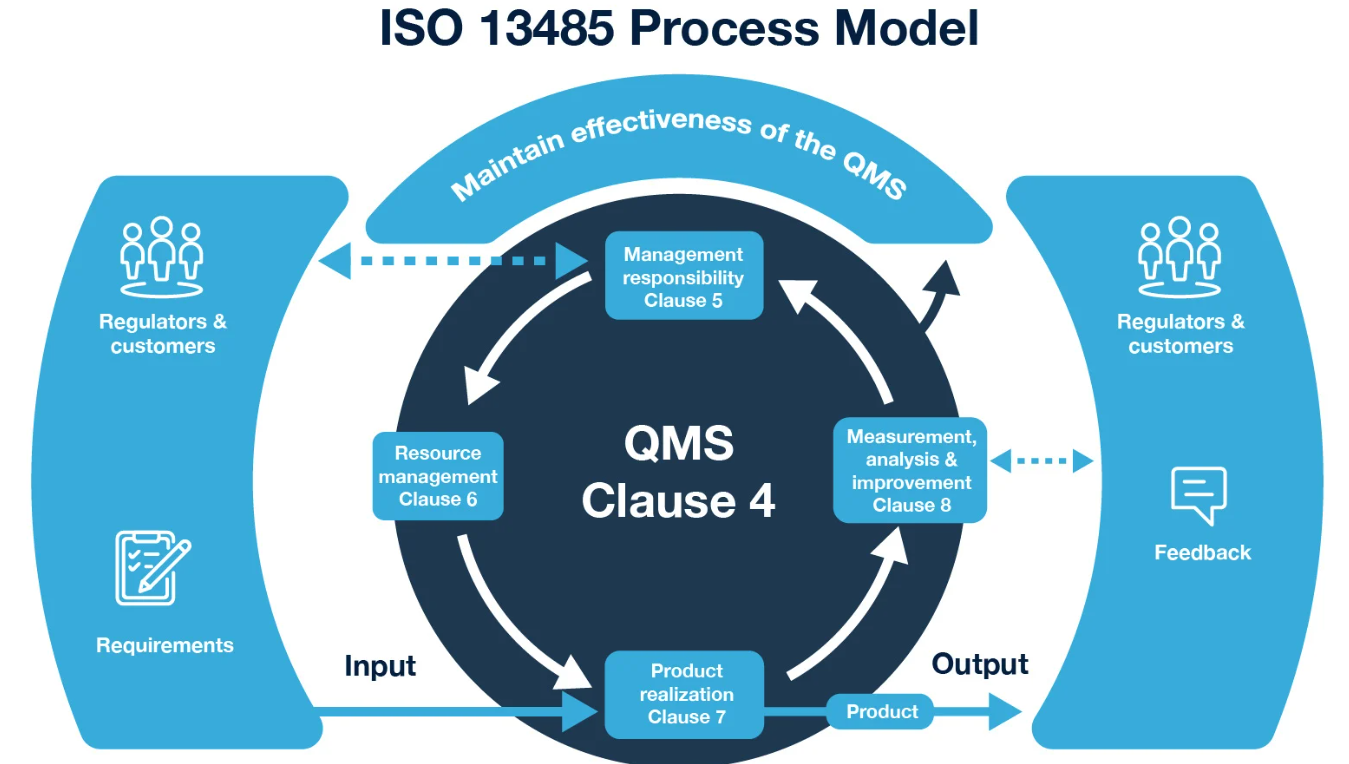
Medical devices management system under ISO 13485:2016
Fields of Application of ISO 13485:2016
ISO 13485 is an international standard applied specifically to the manufacture and distribution of medical products. Below are some specific fields in which ISO 13485 is commonly applied:
- Medical device manufacturing: ISO 13485 applies to companies manufacturing medical devices such as medical machinery, medical instruments, medical treatment equipment and other medical products.
- Medical software development: For companies developing and producing medical software, ISO 13485 can be applied to ensure that the software development process complies with safety and performance requirements.
- Manufacture of medical supplies and materials: ISO 13485 is also applied in the manufacture of medical supplies such as medical chemicals, medical raw materials, medical bandages and gauze, etc.
- Healthcare services: Organisations providing healthcare services such as hospitals, clinics and other care facilities can also use ISO 13485 to improve quality management and service safety.
- Home-use medical products: ISO 13485 also applies to medical products intended for home use, such as medical measuring devices and personal health-related products.
- Medical diagnostic products: ISO 13485 also applies to products related to medical diagnosis, such as diagnostic imaging equipment, laboratory testing equipment and medical examination equipment.
- Customised medical products and services: Companies providing customised medical products and services, or manufacturing to specific customer requirements, can also apply ISO 13485 to ensure their production processes meet quality and safety requirements.
Why ISO 13485:2016 Certification Is Necessary
ISO 13485:2016 certification is especially important for medical device manufacturers in Vietnam, as the law makes it mandatory for businesses under the Government's Decree No. 36/2016/ND-CP. At the same time, in global supply chains many partners and customers require organisations to hold this certification to demonstrate that their production and business operations control the risk factors that could affect the safety of medical devices.
Below are some of the benefits of ISO 13485 certification:
- Demonstrating product safety and quality: ISO 13485 sets specific requirements to ensure the safety and quality of medical products. The certification helps ensure that products meet the highest standards and do not cause harm to users.
- Strengthening the trust of customers and regulators: ISO 13485-certified companies are generally more trusted by customers and health regulators. This can help businesses attract new customers and maintain good relationships with existing ones.
- Legal compliance: ISO 13485 sets requirements for management and reporting relating to medical products. The certification helps organisations comply with domestic and international healthcare regulations and laws, reducing the risk of legal issues.
- Improved management effectiveness: ISO 13485 encourages building an effective quality management system. This can help organisations optimise processes, reduce waste and increase productivity.
- Access to international markets: ISO 13485 is a recognised international standard, enabling companies to expand their markets beyond national borders. This can create new business opportunities and increase sales.
- Risk reduction: ISO 13485 certification helps reduce the risk of product recalls or incidents involving medical products. This can save money and protect the organisation's reputation.
- Competitive advantage: Holding ISO 13485 certification can be an important competitive factor in the healthcare industry, helping organisations attract more international partners and customers than competitors without certification.
Standards to Combine with ISO 13485:2016
- ISO 9001:2015 Quality Management System
- ISO 14001:2015 Environmental Management System
- ISO 45001:2015 Occupational Health and Safety Management System
- ISO 27001:2013 Information Security Management System
Requirements of ISO 13485:2016
The requirements of ISO 13485:2016 are a set of protocols, measures, controls, procedures and assessment methods designed to help organisations identify, monitor, manage, control and improve matters relating to medical devices.
Below are the requirements of the ISO 13485 standard:
- Quality management system: The organisation must establish, implement and maintain a quality management system that meets the requirements of ISO 13485. This system must be documented and reviewed periodically.
- Management responsibility: The organisation's leadership must demonstrate commitment and leadership on quality by defining and assigning responsibilities, ensuring understanding of quality management processes, and driving continual improvement.
- Document control: The organisation must establish procedures to control documents relating to the quality management system, including review, validation and retention of documents.
- Innovation and product design management: ISO 13485 requires the organisation to establish procedures for managing innovation and product design to ensure that medical products comply with safety and performance requirements.
- Product inspection and verification: The organisation must determine appropriate inspection and verification requirements for its medical products and carry out these procedures to ensure quality.
- Raw material and supplier management: ISO 13485 requires the organisation to ensure that raw materials and suppliers meet quality and safety requirements.
- Incident management and product recall: The organisation must establish procedures to handle product-related incidents and take the necessary measures to recall products where needed.
- Post-market surveillance: The organisation must monitor and report on the performance and safety of products after they have been placed on the market.
- Training and competence: The organisation must ensure that staff are adequately trained and competent to perform their quality management-related work.
- Continual improvement: The organisation must commit to continually improving its quality management system by identifying improvement opportunities and taking action to implement those improvements.
Guidance on Implementing ISO 13485:2016
For more information CONTACT VIETESG: 0969060290
email: quynhhoa@vietesg.com