In the era of sustainable development, businesses around the world are focusing on integrating environmental, social and governance (ESG) standards and norms into their business operations. Below is noteworthy information about the carbon credit market
- What is a carbon credit?
- A carbon credit is a commercially tradable certificate representing the right to emit one tonne of carbon dioxide (CO2) or one tonne of CO2 equivalent.
- A tonne of CO2 equivalent is the mass of greenhouse gases converted into tonnes of CO2 according to the global warming potential of those greenhouse gases.
- The carbon credit exchange and offsetting mechanism involves registering and implementing programmes and projects that mitigate greenhouse gas emissions and generate carbon credits according to methodologies recognised internationally or in Vietnam. Carbon credits from these programmes and projects are traded on the carbon market or used to offset greenhouse gas emissions exceeding the allocated allowances.
- The carbon market in Vietnam:
- Vietnam is moving step by step towards developing a carbon market; turning CO2 into a commodity is one of the solutions for mobilising resources for environmental protection and development.
- The carbon credit trading market is gradually heating up in Vietnam, especially since the Government issued Decree No. 06/2022/ND-CP on greenhouse gas emission mitigation and ozone layer protection.
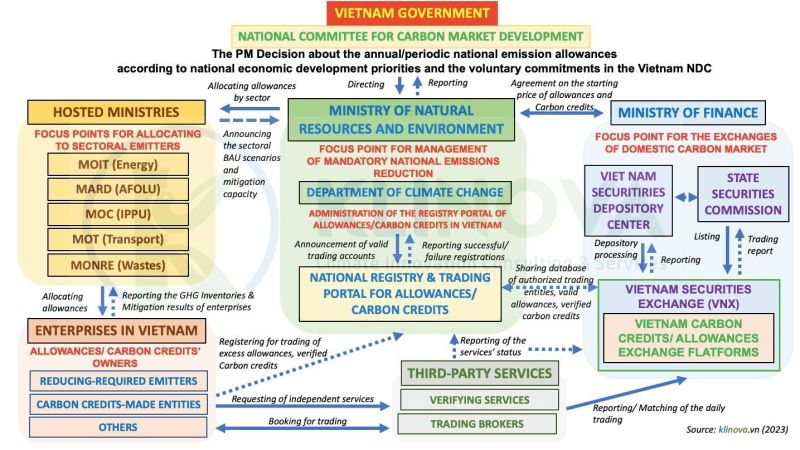
- Ministry of Natural Resources and Environment (MONRE):
- MONRE allocates emission allowances based on the results of the inventory reports submitted by companies and sectors.
- The appraisal of these reports and the allowance allocation mechanism follow Articles 10, 11 and 12 of Decree No. 06/2022/ND-CP.
- Department of Climate Change, MONRE:
- The lead agency managing mandatory requirements related to greenhouse gas reduction.
- Third parties:
- Participate in two roles: verifiers and trading brokers.
- Trading Brokers:
- A new profession/new role has emerged, carrying out trading and reporting