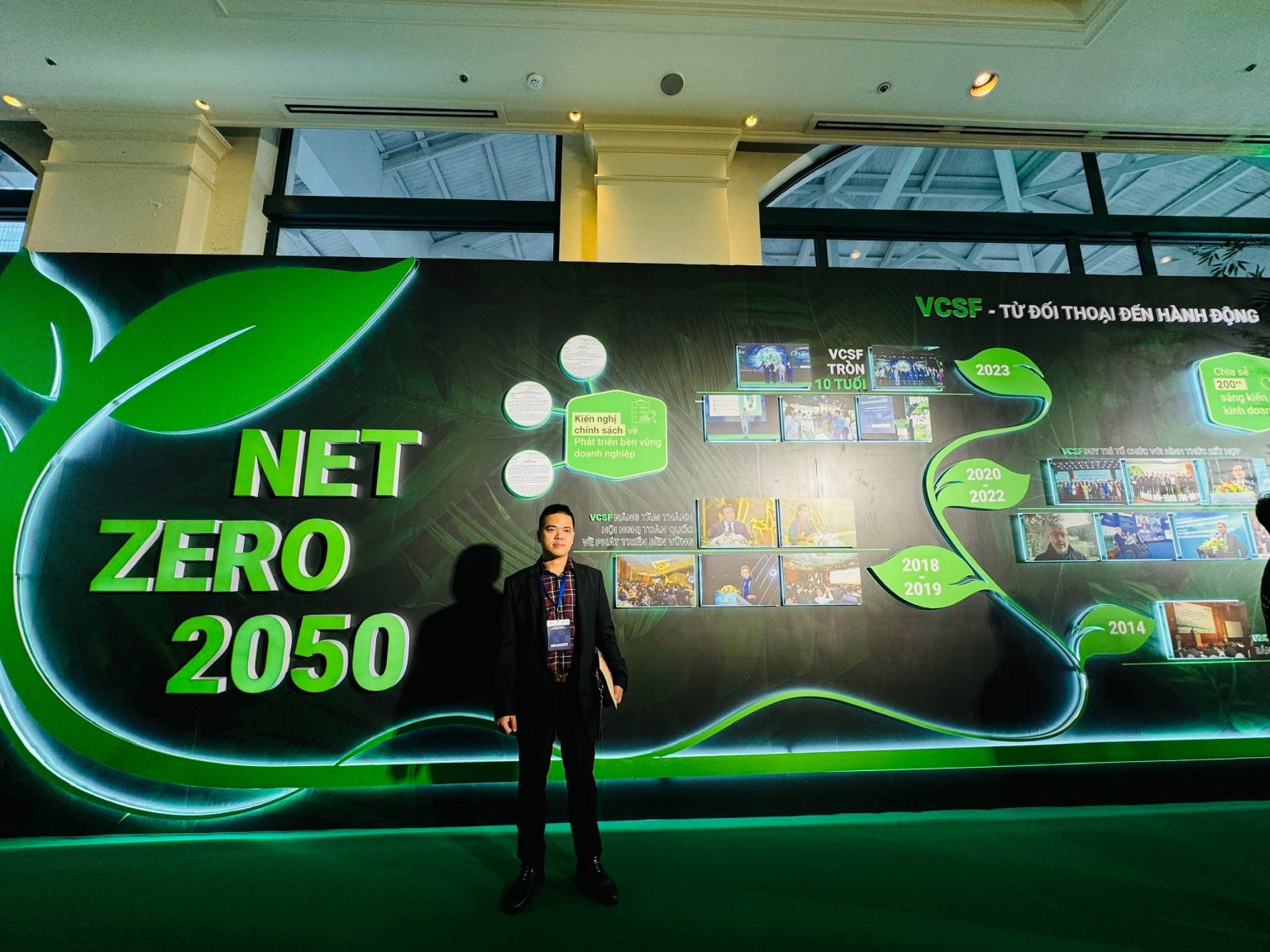
Net Zero is the state in which the greenhouse gases emitted are balanced by the amount removed from the atmosphere. At COP26 (November 2021), Vietnam committed to reaching Net Zero by 2050, and that commitment has since found its way into law, into bank requirements and into contracts with international customers.
Key takeaways
- Decree 06/2022/ND-CP on greenhouse gas mitigation and ozone layer protection sets greenhouse gas inventory obligations for facilities on the list issued by the Prime Minister.
- The EU's CBAM moves into its financial phase from 2026, covering iron and steel, aluminium, cement, fertilisers, electricity and hydrogen.
- A five-step roadmap: inventory → set targets → make real reductions → offset responsibly → disclose and verify.
The legal framework is already in place
The Law on Environmental Protection 2020 lays the foundation for greenhouse gas mitigation and the development of a domestic carbon market. Building on it, Decree 06/2022/ND-CP sets out in detail the obligations to conduct inventories, draw up emissions reduction plans and the roadmap for establishing the carbon market.
Who must conduct a greenhouse gas inventory?
Facilities on the mandatory inventory list (Decision 01/2022/QD-TTg, updated by Decision 13/2024/QD-TTg) must conduct periodic inventories and submit reports as required. The list focuses on energy, industry, transport, construction, waste and agriculture. See the detailed guide in What is a greenhouse gas inventory?
Pressure from export markets
The EU's Carbon Border Adjustment Mechanism (CBAM) has had a transitional phase with reporting obligations since October 2023, and enters its financial phase from 2026. At the same time, multinational corporations are asking suppliers for emissions data to calculate their own Scope 3 emissions.
Businesses without reliable emissions data will not be fined straight away, but they will quietly be dropped from supplier lists.
A five-step roadmap for businesses
1. Inventory: measure before you reduce
Collect data in line with the GHG Protocol or ISO 14064-1 for Scopes 1 and 2, then extend to Scope 3. Data quality (invoices, operating logs, sourced emission factors) matters more than the headline total.
2. Set science-based targets
Choose a base year and set targets for 2030 and 2050. Exporters should refer to the SBTi methodology so that their targets are accepted by international partners.
3. Make real emissions reductions
- Energy efficiency: replacing equipment, optimising operations and an ISO 50001 energy management system (see 7 energy-saving solutions).
- Green electricity: rooftop solar or direct power purchase agreements (DPPA) under Decree 80/2024/ND-CP on direct power purchase.
- Working with suppliers to cut value chain emissions.
4. Offset responsibly
Carbon credits should only be used for residual emissions after reductions have been maximised, and must come from reputable standards. Buying credits instead of cutting emissions is the shortest route to accusations of greenwashing.
5. Disclose and get verified
Disclose in line with GRI 305 or IFRS S2, with supporting evidence, and work towards independent assurance. Verified data is an asset when negotiating with banks and customers.
Net Zero in ESG ratings
In VietESG's ESG rating, greenhouse gas emissions, emissions reduction targets and the level of evidence behind the data are a material group of topics within the Environmental pillar.
Frequently asked questions
How is Net Zero different from carbon neutrality?
Carbon neutrality usually allows most emissions to be offset with credits, whereas Net Zero under science-based standards requires deep emissions cuts first, with only the residual, unavoidable emissions neutralised.
Do small businesses need a Net Zero roadmap?
Yes, if the business is in the supply chain of large customers or exports. The first step is simply an inventory of Scopes 1 and 2 for the most recent year.
How long does it take to start a greenhouse gas inventory?
With available data (electricity and fuel bills), a Scope 1 and 2 inventory for a single facility can usually be completed within a few weeks; Scope 3 takes longer because it depends on supplier data.
VietESG — Independent ESG rating organisation. Ratings based on disclosed data, supporting evidence and a public methodology aligned with GRI and the SDGs.